

Andean Weaving Traditions: A Living Heritage in Peru

An encounter with Jean-Bernard Münch, former President of the Swiss Commission for UNESCO, reveals why traditional weaving in Peru’s Sacred Valley is much more than an ancient craft.
- In the heart of Peru's Sacred Valley
- Andean Weaving Traditions: More Than an Ancient Craft
- A Meaningful Visit to our Family Weaving Workshop
- Understanding Living Cultural Heritage
- Learning the Art of Andean Weaving Firsthand
- Martina, Ruth, and the Importance of Family Heritage
- Why Quality Tourism Matters for Cultural Preservation
- What Travelers Can Experience at a Sacred Valley Textile Workshop
- Is an Andean Weaving Workshop Worth Including in a Luxury Peru Itinerary?
- Peru Private Tours : Connecting Travelers With Living Andean Culture
- Frequently Asked Questions About Andean Weaving Traditions
In the heart of Peru’s Sacred Valley
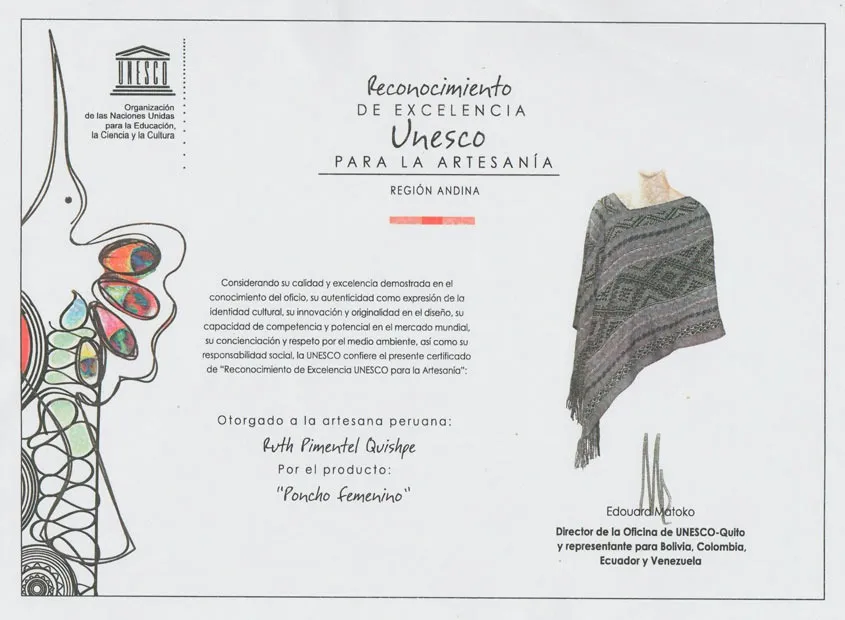
Andean weaving traditions continue to connect generations through knowledge, creativity, and cultural memory. Every handwoven textile carries a story, shaped by the artisan’s skill, the symbols of their community, and techniques passed down within families.
For travelers visiting Cusco and Machu Picchu, discovering this living heritage offers something beyond the experience of exploring archaeological monuments. It is an opportunity to meet the people who preserve Andean culture through their everyday work.
This understanding was at the heart of a memorable visit by Jean-Bernard Münch, former President of the Swiss Commission for UNESCO.
His reflections, recorded in an interview conducted by the family, offer valuable insights into why cultural preservation, responsible tourism, and meaningful encounters with local communities matter.
Andean Weaving Traditions: More Than an Ancient Craft
Traditional Andean weaving is among the most expressive forms of cultural knowledge found in the Peruvian highlands.
For generations, textile-making has connected everyday life with community identity, family knowledge, agriculture, and artistic expression.
A woven textile can communicate far more than aesthetic beauty. Its colors, patterns, materials, and techniques may reflect cultural values, local identities, and knowledge inherited from previous generations.
In Parobamba where weaving remains an active tradition, the craft is not simply a historical practice displayed for visitors. It continues to evolve through the work of living artisans.
Textiles as Expressions of Andean Cultural Identity
Across the Andes, woven fabrics have long played important roles in clothing, ceremonies, trade, and community life.
Traditional textiles express identity through distinctive combinations of motifs, colors, and weaving techniques. The meanings of individual designs vary between communities and should be understood within their own cultural contexts.
Learning about these patterns directly from the people who create them helps visitors appreciate the complexity of Andean textile art.
The finished cloth is only one part of the story. The knowledge needed to produce it is equally significant.
Knowledge Passed From Generation to Generation
Traditional weaving requires patience, technical precision, and familiarity with materials and tools.
Knowledge is passed between parents, children, grandparents, and other community members through observation, practice, and repeated instruction.
This intergenerational transmission is particularly important because many aspects of traditional craftsmanship cannot be fully understood through written descriptions alone.
They must be learned through experience.
For visitors, witnessing this process provides a deeper perspective on why preserving living traditions matters.
A Meaningful Visit to our Family Weaving Workshop
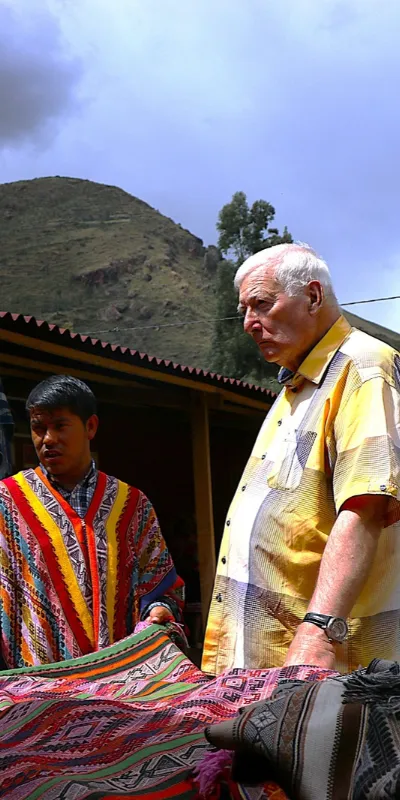
During his visit to the Sacred Valley, Jean-Bernard Münch had the opportunity to meet Martina, Ruth, and their family at the Textile weaving workshop.
The encounter brought together a visitor with extensive experience in international cultural affairs and a family dedicated to maintaining traditional Andean textile knowledge.
Rather than observing a demonstration from a distance, Münch was welcomed into the family’s working environment and invited to experience their craft firsthand.
In the interview following his visit, he described the experience as deeply rewarding and emphasized the warmth of the welcome he had received.
What made the encounter particularly meaningful was not only the quality of the weaving, but the opportunity to understand the people, values, and knowledge behind it.
Why This Encounter Was Significant
Münch’s reflections focused on an essential distinction: protecting cultural heritage is not limited to preserving buildings, artifacts, or historic objects.
It also involves supporting cultural practices that remain meaningful to the communities who maintain them.
At the workshop, he encountered a family continuing traditional methods while considering how their knowledge can be transmitted and adapted for future generations.
This approach closely reflects the broader principles of safeguarding intangible cultural heritage: encouraging communities to maintain, transmit, and continually recreate their cultural practices.
A Personal Reflection on Living Culture
One of Münch’s most important observations concerned the relationship between preservation and evolution.
He spoke about the value of reconstructing and understanding historical ways of working while allowing appropriate innovations to support the tradition’s continuity.
His comments highlighted a fundamental idea: living heritage does not have to remain unchanged in order to retain its cultural meaning.
Instead, it can remain rooted in Parobamba identity while adapting thoughtfully to new generations and circumstances.
For Ruth and her family, the challenge is not simply to keep producing traditional textiles. It is to maintain the knowledge, values, and cultural relationships that make those textiles meaningful.
Understanding Living Cultural Heritage
The concept of intangible cultural heritage helps explain why traditional weaving deserves attention alongside Peru’s archaeological and architectural treasures.
According to UNESCO’s framework, intangible cultural heritage encompasses practices, knowledge, skills, and cultural expressions recognized by communities as part of their heritage.
Safeguarding these traditions involves supporting their transmission and continued relevance rather than treating them as historical objects that must never change.
Preserving Knowledge, Not Just Objects
A handwoven textile can survive for decades or even centuries under suitable conditions.
However, preserving the textile alone does not guarantee that future generations will understand how it was made or what its patterns signify.
The living knowledge behind the object is essential.
This includes the ability to prepare materials, work with traditional tools, recognize patterns, maintain weaving tension, and explain the meanings associated with particular designs.
Supporting artisans who continue practicing and teaching these skills helps maintain the connections between cultural heritage and everyday life.
Tradition and Innovation Can Coexist
Preserving a traditional craft does not necessarily mean reproducing every aspect of the past without change.
Artisans may develop new designs, adapt products to different uses, or introduce practical improvements while maintaining the skills and values central to their work.
The important question is whether the community continues to guide the development of its heritage.
Münch recognized this balance during his visit, appreciating the family’s efforts to understand earlier weaving techniques while helping the tradition continue into the future.
Learning the Art of Andean Weaving Firsthand
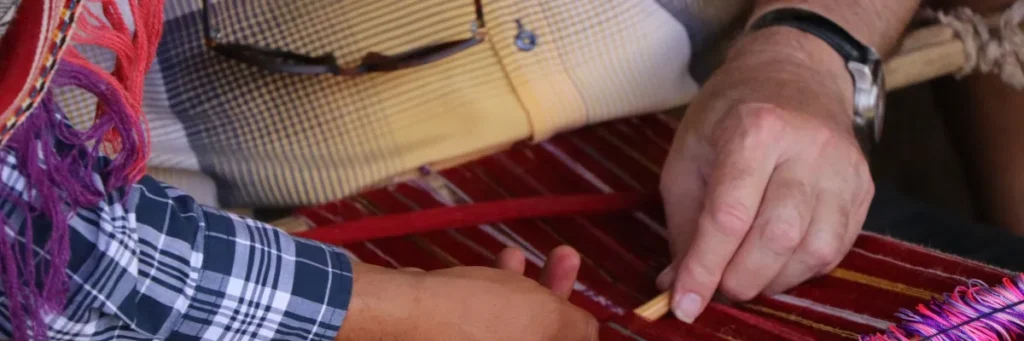
One of the most memorable moments of Münch’s visit came when he tried traditional weaving himself.
What initially appeared to be a relatively simple activity quickly revealed the considerable skill involved.
Coordinating the threads, maintaining the correct tension, and following a pattern required more concentration and dexterity than he had anticipated.
During the interview, Münch humorously acknowledged the difficulty of the task, remarking that his fingers seemed too large for such delicate work.
His experience illustrated something that visitors often discover during a hands-on textile workshop: the extraordinary skill of an experienced artisan becomes much easier to appreciate when attempting the process personally.
The Precision Behind Every Textile
Traditional weaving involves countless small decisions and careful movements.
An artisan must maintain consistent tension while managing multiple threads and following the intended design.
A minor error can disrupt the pattern or require corrections, particularly in intricate textiles.
During his interview, Münch expressed admiration for the patience, concentration, and attention to detail required to produce high-quality work.
He contrasted his own difficulty with the remarkable confidence and speed demonstrated by experienced weavers.
The lesson was simple but powerful: traditional craftsmanship represents years of accumulated expertise, not merely a technique that can be mastered through a brief demonstration.
Why Participation Changes the Experience
Watching a skilled artisan weave is fascinating.
Attempting the same process creates an entirely different understanding.
Visitors begin to recognize the relationship between technique, practice, and cultural knowledge. They also gain a greater appreciation for the time and labor involved in producing handmade textiles.
This is what makes a participatory workshop fundamentally different from a conventional souvenir-shopping stop.
The objective is not simply to leave with a product, but to understand the people and processes behind its creation.
Martina, Ruth, and the Importance of Family Heritage
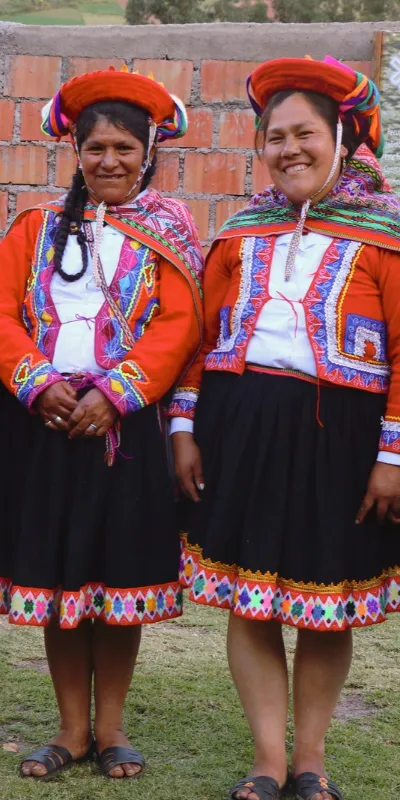
At the Traditional Textile workshop are the artisans whose expertise sustains the family’s textile traditions.
During his visit, Münch met Martina, her daughter Ruth, and other family members involved in the project.
Their work represents more than individual craftsmanship. It reflects the importance of family participation in transmitting cultural knowledge between generations.
A Tradition Sustained Through Family Commitment
Family-based workshop in Cusco can create valuable opportunities for younger generations to learn directly from experienced artisans.
The teaching process involves watching an older family member prepare materials, practicing individual techniques, and gradually developing the confidence to produce increasingly complex work.
The knowledge transmitted is both practical and cultural.
A younger artisan learns how to weave, but may also learn why a particular technique matters, what a design represents, and how textile-making relates to community identity.
This relationship between technical knowledge and cultural meaning is central to maintaining living heritage.
A Message of Encouragement for Future Generations
When asked what recommendations he would offer Martina and her descendants, Münch emphasized perseverance.
He encouraged the family to continue its work, remain committed to its principles, and avoid becoming discouraged by the challenges involved.
His response reflected respect for the family’s dedication and the long-term importance of their undertaking.
The value of a project lies not only in what it produces today, but in the opportunities it creates for future generations to continue learning and expressing their cultural identity.
Why Quality Tourism Matters for Cultural Preservation
One of the interview’s most important themes was the relationship between traditional culture and tourism.
When asked about international opportunities for the family project, Münch offered a thoughtful perspective.
He recognized the potential benefits of introducing Andean weaving traditions to a wider international audience. However, he also warned against expanding the activity in ways that might separate it from its Peruvian cultural roots.
His recommendation focused on developing a form of quality tourism that attracts visitors genuinely interested in understanding local culture.
Cultural Understanding Over Mass Tourism
Not every visitor approaches a cultural experience with the same expectations.
Some travelers prefer brief demonstrations, while others want to learn about the history, symbolism, and knowledge behind traditional practices.
For communities maintaining living traditions, the second approach can create opportunities for more meaningful exchanges.
Rather than turning craftsmanship into a standardized performance, carefully organized cultural visits can provide space for conversation, learning, and respectful participation.
The focus shifts from watching an activity to understanding its cultural significance.
Tourism Should Support Cultural Identity
Tourism can create economic opportunities for artisans, but its growth also introduces challenges.
Increased demand may encourage changes in production methods, materials, and the types of products offered.
The objective should therefore be to develop experiences that respond to visitor interest without undermining the autonomy or cultural identity of the host community.
This requires attention to fair compensation, appropriate group sizes, cultural sensitivity, and the community’s own priorities.
Münch’s reflections offer an important reminder: international visibility should help sustain cultural knowledge rather than replace its original purpose.
Visitors Become Ambassadors of Cultural Understanding
A meaningful cultural encounter can extend far beyond the day of the visit.
Travelers return home with a deeper appreciation of Andean traditions and a personal understanding of the people who maintain them.
They may share their experience with family and friends, talk about the significance of the textiles they encountered, and develop lasting respect for the cultural traditions of Peru.
In this way, quality tourism can help communicate cultural heritage internationally without requiring artisans to move their work away from its local foundations.
What Travelers Can Experience at a Sacred Valley Textile Workshop
A thoughtfully organized textile workshop offers visitors the opportunity to discover Andean culture through active participation.
At the Sacred Valley Textile Workshop offered through Peru Private Tours, guests can learn about traditional weaving methods and engage directly with skilled local artisans.
Depending on the selected program, the experience can introduce several stages of the textile-making process.
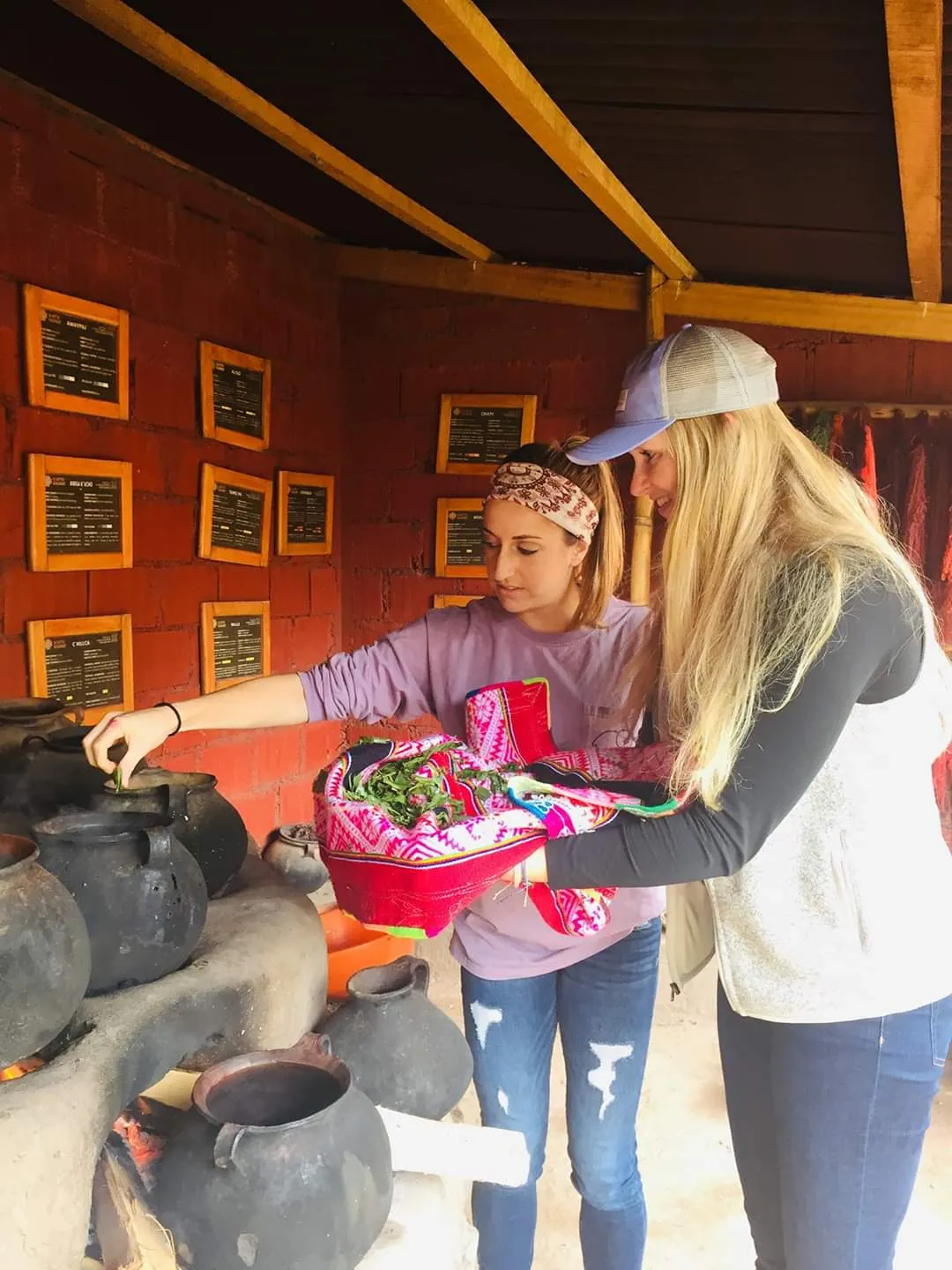
Discover Natural Dyeing Techniques
Natural dyeing is an important element of traditional Andean textile production.
Artisans demonstrate how colors are obtained and prepared using locally known materials and techniques.
Learning about the dyeing process helps visitors understand the relationship between textile-making, regional knowledge, and the natural environment.
Try Traditional Backstrap-Loom Weaving
A hands-on weaving session introduces visitors to the coordination and precision involved in working with a traditional loom.
Under the guidance of an experienced artisan, participants begin learning how threads are arranged and how patterns gradually take shape.
No previous weaving experience is necessary for an introductory activity.
The purpose is not to replicate the skill of a master artisan, but to gain a genuine appreciation of the craftsmanship.
Understand the Meaning Behind Patterns
Andean textiles are not simply combinations of attractive colors and geometric designs.
Patterns can carry meanings associated with local identity, landscapes, beliefs, and community traditions.
Learning directly from artisans allows visitors to appreciate these meanings in their proper cultural context.
Connect With the People Behind the Craft
Perhaps the most valuable part of the experience is the human encounter.
Visitors can ask questions, learn about the artisans’ work, and understand the responsibilities involved in maintaining a family tradition.
Such interactions transform the experience from a technical demonstration into a cultural exchange.
Is an Andean Weaving Workshop Worth Including in a Luxury Peru Itinerary?
For travelers interested in authentic cultural experiences, a textile workshop can become one of the most memorable parts of a private journey through Peru.
Luxury travel is not defined exclusively by exceptional hotels, private vehicles, or exclusive restaurants.
It can also be defined by the quality of access, the depth of interpretation, and the opportunity to experience places through meaningful relationships with local people.
A carefully arranged workshop provides a different kind of exclusivity: time to learn from artisans whose knowledge cannot be replicated through conventional sightseeing.
Ideal for Culturally Curious Travelers
The experience is particularly well suited to visitors interested in art, history, Indigenous knowledge, handmade craftsmanship, and traditional culture.
It can also appeal to families seeking educational experiences that encourage children to engage with local traditions.
Couples and private groups may appreciate the opportunity to participate together in an activity that offers both creativity and cultural depth.
Combining Weaving With Sacred Valley Exploration
A textile experience can be integrated into a wider private itinerary visiting destinations such as Pisac, Moray, Maras, and Ollantaytambo.
It can also form part of a longer journey connecting the Sacred Valley with Machu Picchu and Cusco.
For travelers who want more time for cultural immersion, a dedicated textile workshop allows a deeper exploration of techniques and traditions.
The ideal arrangement depends on the duration of the journey, personal interests, and the availability of the artisan hosts.
Peru Private Tours : Connecting Travelers With Living Andean Culture
Peru Private Tours believes that an exceptional journey should reveal not only Peru’s extraordinary landscapes and archaeological treasures, but also the people who continue shaping its cultural identity.
Through relationships with local artisans and community hosts, we design private journeys that create opportunities for authentic cultural encounters.
Our Sacred Valley textile experiences bring travelers closer to traditional Andean craftsmanship through guided learning, hands-on participation, and thoughtfully coordinated visits.
Private transportation, personalized itinerary planning, knowledgeable local guides, and in-country support help make these experiences accessible within a wider Peru journey.
The objective is to create encounters that respect the artisans’ work while allowing visitors to develop a genuine appreciation for the traditions they maintain.
For travelers seeking a more personal understanding of Peru, an encounter with Andean weaving traditions can offer a meaningful complement to the country’s celebrated historical sites.
A Cultural Experience That Stays With You
Near the end of his visit, Jean-Bernard Münch reflected on what he had learned from Andean textile-making.
He recognized that the weaving tradition involved much more than producing an object that could be admired as art.
The textiles also carried values, symbols, and cultural meanings.
His reflection captures the essence of the Textile family’s work and the reason authentic cultural experiences deserve an important place in contemporary travel.
A handwoven textile can be taken home, displayed, or passed to another generation.
But the greatest value of the encounter may be something less tangible: understanding the dedication of the artisan, the knowledge inherited from earlier generations, and the cultural identity expressed through every thread.
For travelers, this is an opportunity to discover a living side of Peru.
For the artisans, it is an opportunity to share their heritage on their own terms.
Frequently Asked Questions About Andean Weaving Traditions

Recent guides
Andean Weaving Traditions: A Living Heritage in Peru
An encounter with Jean-Bernard Münch, former President of the Swiss Commission for UNESCO, reveals why traditional weaving in Peru’s Sacred Valley is much more than an ancient craft. reading time…

Peruvian Cuisine
CUISINE GUIDE Discover Peru’s Finest Food and Luxury Culinary Experiences Peruvian cuisine is more than a collection of delicious dishes. It is a journey through ancient civilizations, extraordinary biodiversity, and…
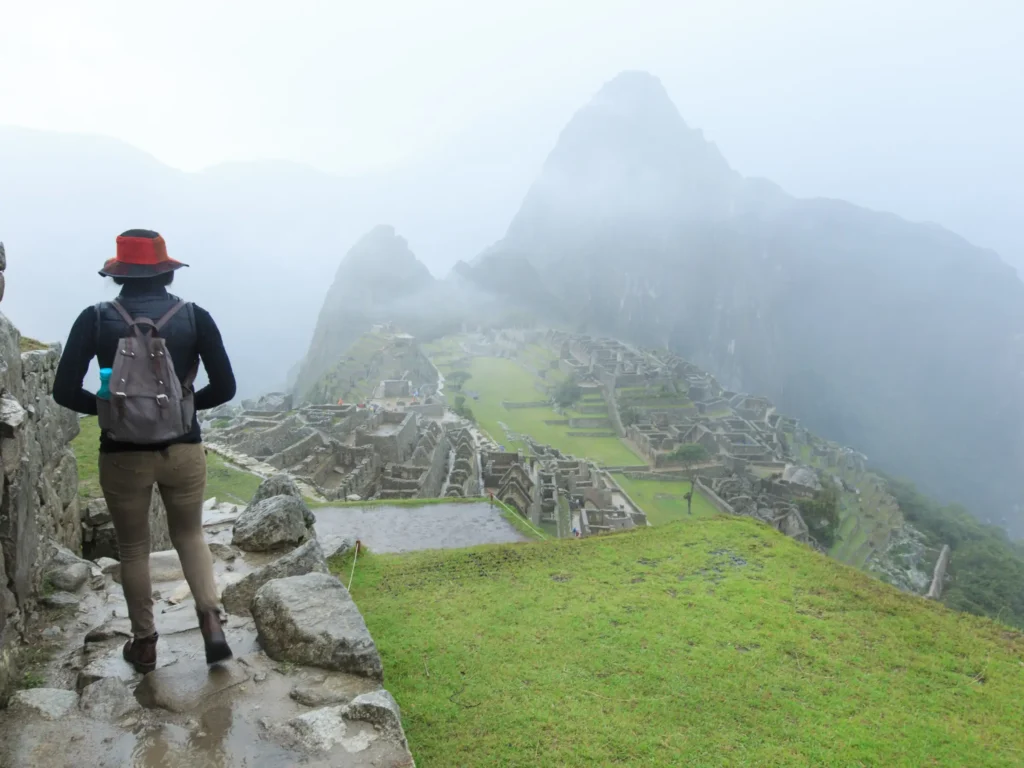
Machu Picchu Circuits Explained
travel guide Which Route Should You Choose? MACHU PICCHU CIRCUITS GUIDE Choosing the right Machu Picchu circuit is one of the most important decisions you will make when you plan…

Private Peru Tours
travel guide How to Design a Tailor-Made Journey Through Peru Luxury Machu Picchu tours A private tour in Peru is not a standard itinerary with a private guide and vehicle….
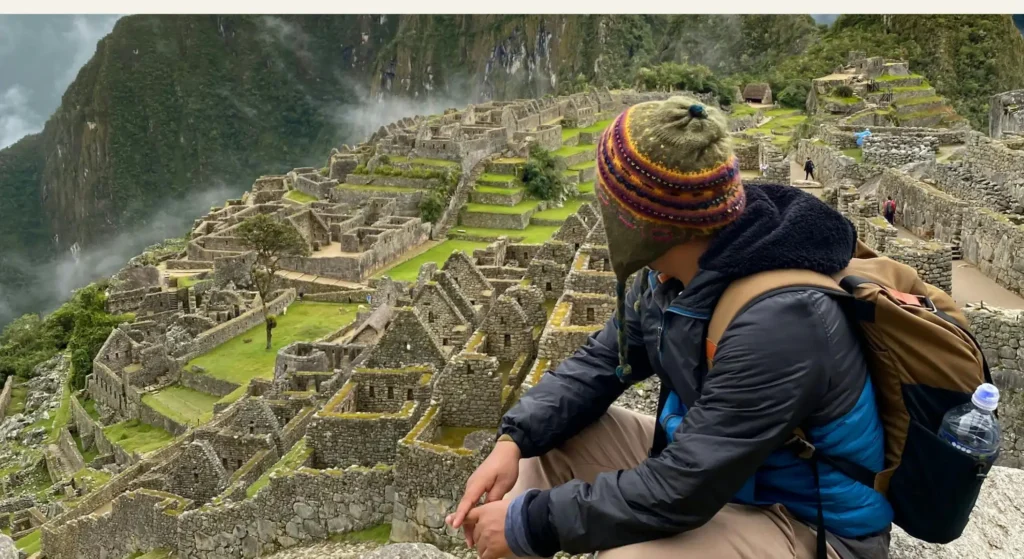
Luxury Machu Picchu Tours
travel guide How to Plan a Private, Seamless & High-End Experience Luxury Machu Picchu tours Machu Picchu is one of the world’s most iconic travel experiences if planned properly. The…
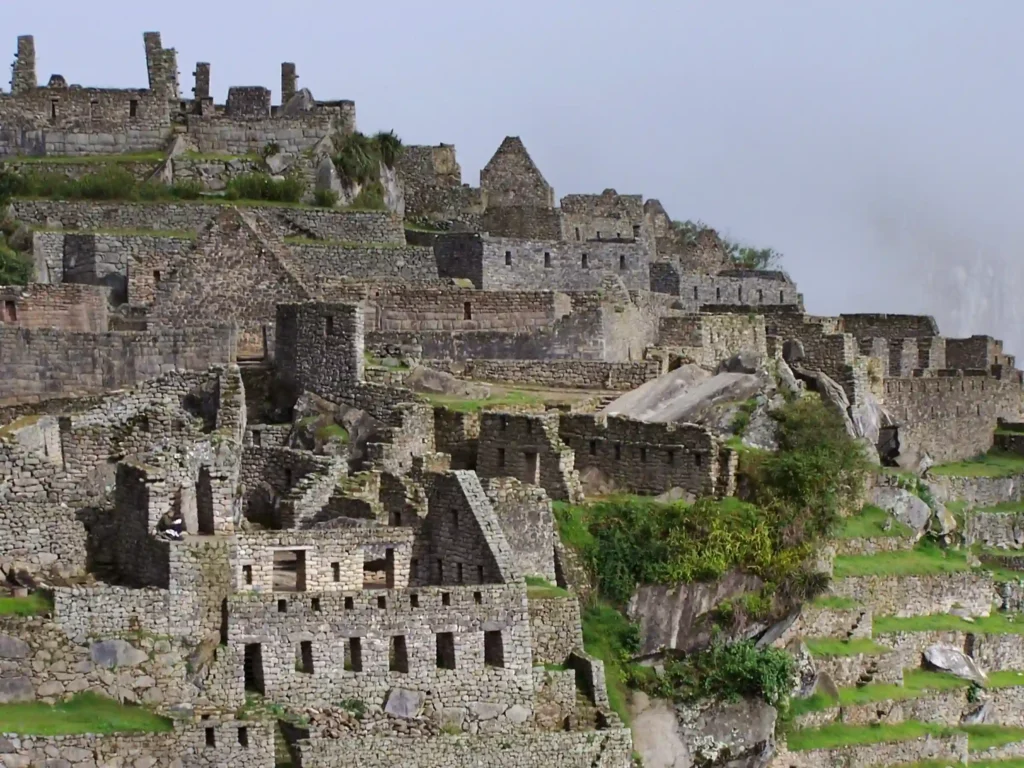
Best Time to Visit Machu Picchu: The Definitive Local Guide to Weather, Crowds, Tickets & Travel Planning
Table of Contents Use this guide to choose the best travel dates for your Machu Picchu experience based on your style, schedule, and priorities. Best Time to Visit Machu Picchu…
Planning a Private Journey Through Peru?
Use our travel guides to understand your options—then let our local Peru specialists design the journey around your dates, pace, interests, and comfort preferences.
Whether you’re planning Machu Picchu, the Sacred Valley, the Amazon, Lake Titicaca, Arequipa, Lima, or a complete Peru itinerary, we’ll help you connect everything with private guiding, seamless logistics, and thoughtful timing.
