
To consider a machu picchu luxury hotel is to engage with one of the most unusual hospitality contexts in the world. Unlike most destinations where luxury is defined by distance from crowds, here it is defined by proximity—to an archaeological site that has remained largely unchanged since the 15th century, and to a landscape where cloud forest and granite ridges intersect.
Accommodation near Machu Picchu is deliberately limited. Strict conservation policies restrict development, ensuring that any hotel operating in the area must coexist with a fragile ecosystem and a site of global cultural importance. As a result, luxury here is not expressed through scale, but through discretion, location, and the ability to shape access.
The Geography of Luxury at Machu Picchu
Unlike urban luxury destinations, where choice is abundant, the Machu Picchu area is geographically constrained. The nearest settlement, Aguas Calientes (officially Machu Picchu Pueblo), sits in a narrow valley surrounded by steep mountains and dense vegetation. There are no roads connecting it directly to Cusco—access is only possible by train or on foot.
This isolation shapes the nature of every machu picchu luxury hotel. Supplies arrive by rail, architecture must adapt to the terrain, and guest movement is defined by a combination of buses, walking paths, and carefully timed entry to the citadel.
Belmond Sanctuary Lodge: Immediate Proximity
The most singular property in the region is Belmond Sanctuary Lodge. It stands adjacent to the entrance of Machu Picchu itself—an arrangement that fundamentally alters the visitor experience.
Guests staying here are able to access the site at its earliest opening hours and remain until closing, avoiding the logistical constraints faced by those arriving from Aguas Calientes. This proximity allows for multiple visits across different times of day, offering a more nuanced understanding of the site’s changing atmosphere.
The lodge itself is intentionally understated. Rooms are designed for comfort rather than spectacle, with the surrounding landscape taking precedence. Gardens filled with native orchids and hummingbirds create a transitional space between cultivated hospitality and the untamed environment beyond.
Dining is similarly restrained but precise, with menus incorporating Andean ingredients interpreted through contemporary techniques.
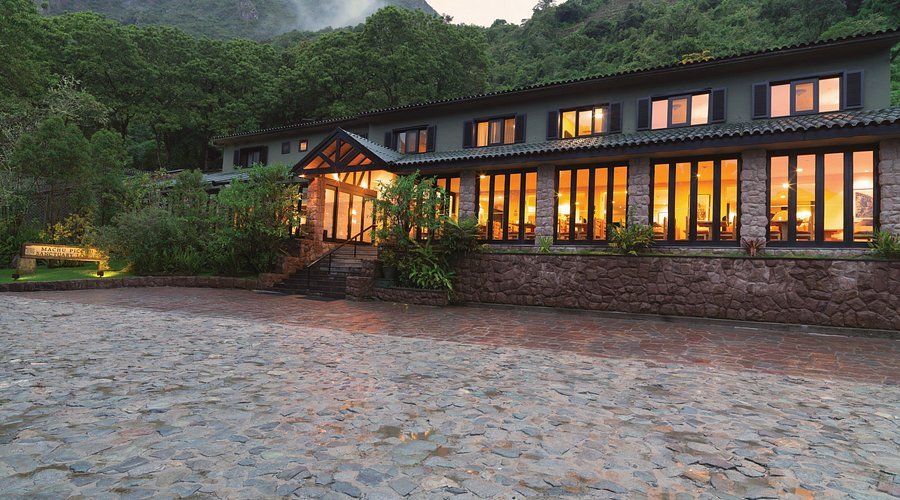
Inkaterra Machu Picchu Pueblo Hotel: Immersion in the Cloud Forest
Set within 12 acres of cloud forest, Inkaterra Machu Picchu Pueblo Hotel offers a different interpretation of luxury—one grounded in ecological immersion.
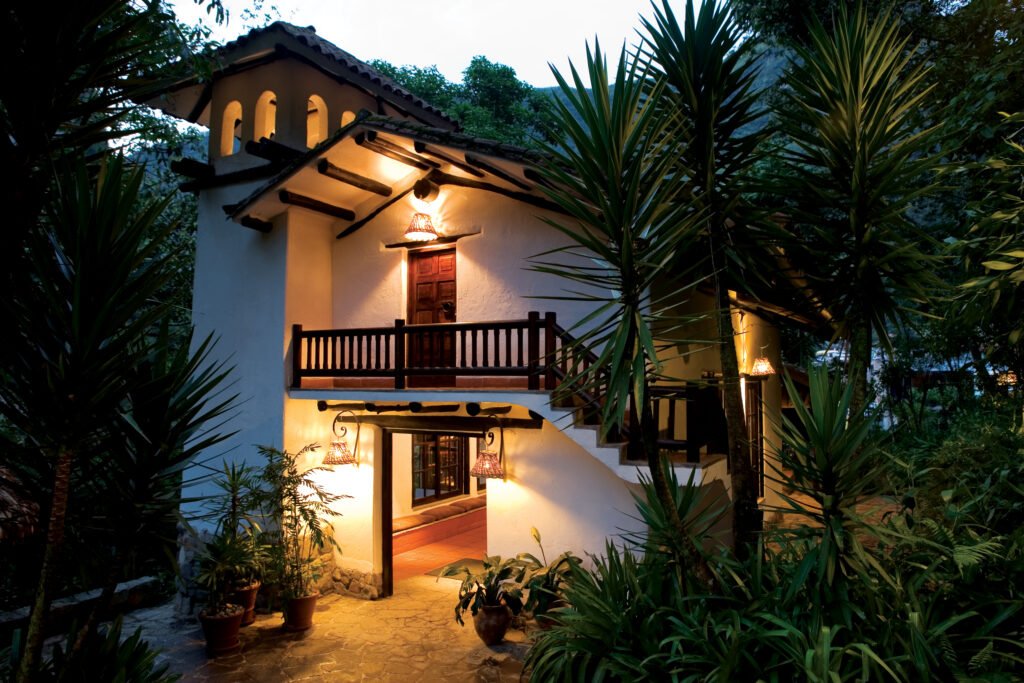
Rather than positioning itself as a vantage point toward Machu Picchu, the property functions as a private reserve. Stone pathways wind through dense vegetation, connecting standalone casitas constructed from local materials. The architecture draws on traditional Andean forms while incorporating modern comforts such as fireplaces, heated floors, and spacious bathing areas.
The hotel’s biodiversity is notable. Over 200 species of birds and a vast array of orchids have been documented on the grounds. Guided walks led by in-house naturalists provide context, transforming the stay into a study of the region’s ecology rather than a simple prelude to visiting the citadel.
This approach appeals to travellers who view Machu Picchu not as an isolated monument, but as part of a broader environmental system.
Design Philosophy and Materiality
A defining characteristic of any machu picchu luxury hotel is restraint in design. The surrounding environment imposes both aesthetic and practical limitations.
Materials tend to be locally sourced—stone, wood, and clay—allowing structures to blend into the landscape. Colour palettes are muted, reflecting the greens and browns of the cloud forest rather than competing with them.
Interiors prioritise warmth and texture over ornamentation. Textiles woven in nearby communities, hand-carved furnishings, and subtle references to Inca geometry create a sense of continuity with regional traditions.
Lighting is deliberately soft, acknowledging the absence of urban light pollution and preserving the atmosphere of the surrounding environment.
Timing as a Luxury Asset
One of the most overlooked aspects of staying in a machu picchu luxury hotel is control over time.
Visitors arriving from Cusco typically follow a fixed schedule dictated by train timetables and entry slots. In contrast, overnight guests near Machu Picchu gain flexibility:
- Early entry before peak visitor hours
- Opportunity to revisit the site in the afternoon
- Access during changing weather conditions, when mist reveals and conceals the ruins in rapid succession
This temporal freedom allows for a more measured engagement with the site, where observation replaces urgency.
Gastronomy in a Remote Setting
Culinary programmes within these hotels reflect both logistical constraints and creative opportunity. Ingredients must often be transported from Cusco or the Sacred Valley, yet the surrounding environment provides access to native herbs, fruits, and freshwater fish.
Menus frequently incorporate:
- Quinoa and native tubers cultivated in high-altitude regions
- River trout sourced from Andean waters
- Amazonian ingredients introduced through contemporary Peruvian cuisine
Dining spaces are typically intimate, emphasising atmosphere over scale. The absence of external distractions—traffic, urban noise—allows meals to unfold at a slower pace.
Practical Considerations
Access and Logistics
Reaching any machu picchu luxury hotel requires coordination. Most travellers arrive via train from either Poroy or Ollantaytambo, followed by a short transfer within Aguas Calientes.
For the Belmond Sanctuary Lodge, a bus journey up a series of switchbacks leads directly to the entrance of Machu Picchu. Guests of Inkaterra remain within the town, with scheduled buses transporting them to the site.
Seasonal Variations
Weather plays a significant role in shaping the experience:
- Dry season (May–September): clearer visibility, cooler temperatures
- Wet season (November–March): increased rainfall, denser vegetation, and more atmospheric conditions
Hotels adapt accordingly, offering amenities such as covered walkways, indoor lounges, and tailored excursion planning.
Sustainability and Conservation
Operating in proximity to a UNESCO World Heritage Site requires adherence to strict environmental standards. Waste management, water usage, and energy consumption are carefully regulated.
Properties such as Inkaterra actively contribute to conservation efforts, supporting research and reforestation initiatives within the region.
Local Insights and Cultural Context
The presence of luxury hotels near Machu Picchu raises questions about the balance between access and preservation. While these properties provide comfort and exclusivity, they also operate within a framework designed to limit impact.
Local communities remain integral to this ecosystem. Many staff members originate from nearby villages, bringing knowledge of language, tradition, and landscape into the guest experience. This connection ensures that hospitality is not detached from its cultural context.
It is also worth noting that Machu Picchu was never “lost” to local populations. The narrative of its rediscovery by Hiram Bingham reflects an external perspective rather than an absence of indigenous awareness.
The Nature of Luxury in Machu Picchu
A machu picchu luxury hotel does not compete with the monument it neighbours. Instead, it exists in dialogue with it—providing a framework through which the site can be experienced with greater depth and less haste.
Luxury here is defined by:
- Proximity without intrusion
- Comfort without excess
- Access shaped by timing rather than scale
In a landscape where history, geology, and climate converge, the role of the hotel is not to dominate, but to facilitate a more considered encounter with one of the most studied and debated sites in the Andes.
The result is a form of travel where accommodation becomes part of the narrative—an extension of the journey rather than a separate entity.